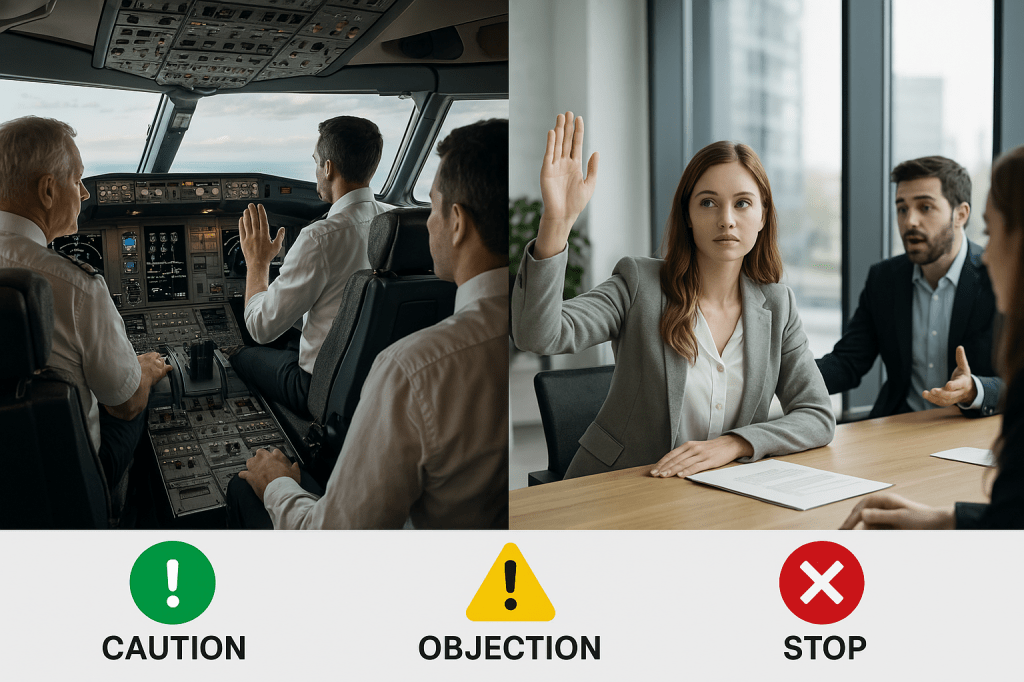
In 1977, the world witnessed the deadliest aviation disaster in history: Two jumbo jets collided on the runway in Tenerife, killing 583 people.
But the crash wasn’t due to mechanical failure.
It was a behavioral failure.
The KLM captain was confident — too confident.
His crew noticed subtle signs that something was wrong.
But no one stopped him.
Why?
Because in that cockpit, challenging authority felt more dangerous than crashing the plane.
This was the wake-up call that gave birth to Crew Resource Management (CRM) — a system that finally acknowledged the role of human misbehavior in aviation safety. CRM taught pilots to speak up and captains to listen. It helped make flying safer.
But CRM had a blind spot:
It trained people to behave better —
…but it didn’t track actual behavior.
…and it didn’t offer a way to objectively resolve those micro-moments where dominance, fear, or dismissiveness crept back in, as no one behaves perfectly all the time.
Now, more than four decades later, those same dynamics play out in boardrooms, surgical theatres, start-up teams, and project war rooms.
We still let ego, silence, and fear kill ideas.
We still let conflict escalate — or simmer quietly — while malicious gossip travels the corridors until it finally breaks the system.
That’s why we built SpatzAI.
It’s not just human errors that crash a systems.
It’s objectionable behavior (misbehavior) left unchallenged.
SpatzAI helps teams call it out fairly, track it transparently if dismissed, and resolve it collaboratively — long before it becomes a crash.
🟢 Caution
🟡 Objection
🔴 Stop
A new kind of CRM for every team on the planet.
Because fairness, not silence, keeps systems alive.
 Object123
Leave a comment