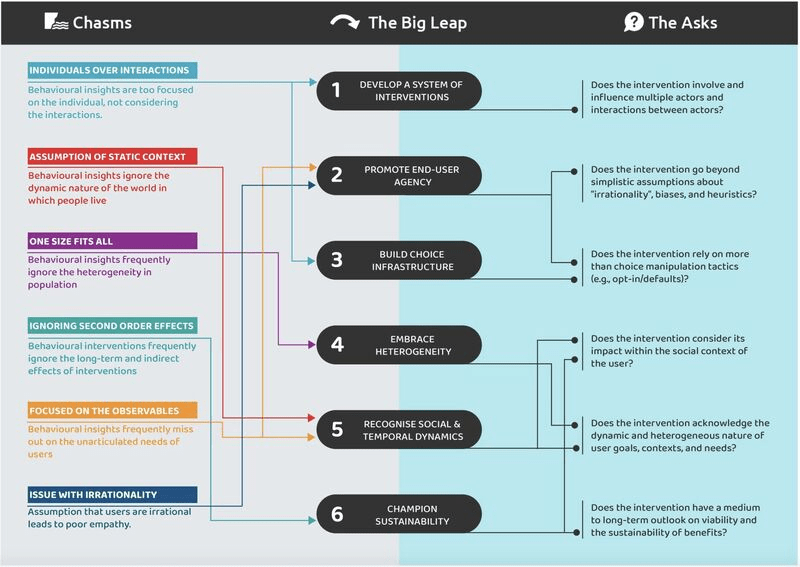
SpatzAI aligns well with Gantayat and colleagues’ model for: Taking The Big Leap by addressing many of the issues identified and integrating some of the proposed “big leaps” into its framework. Here’s how SpatzAI fits with the six chasms and leaps:
Chasms and How SpatzAI Addresses Them
- Individuals over interactions:
- SpatzAI’s approach: The platform emphasizes team dynamics and interactions rather than focusing solely on individuals. The Caution-Objection-Stop model and the peer-review/team-assisted review ensure that behaviors are contextualized within interpersonal and group interactions, recognizing that individuals’ actions are shaped by their interactions with others.
- Assumption of static context:
- SpatzAI’s approach: By operating in real-time within team environments (e.g., Slack or Microsoft Teams), SpatzAI adapts to the evolving context of workplace interactions. It captures the dynamic nature of conflicts and micro-conflicts, allowing for timely interventions that reflect changing circumstances.
- One size fits all:
- SpatzAI’s approach: The platform is designed to account for team heterogeneity. It empowers team members to customize how they implement the Caution-Objection-Stop model within their unique organizational or cultural context. The integration of a team charter ensures alignment with specific team dynamics and values.
- Ignoring second-order effects:
- SpatzAI’s approach: The model inherently considers second-order effects by focusing on fostering a culture of psychological safety and accountability. Verbal cautions and team-assisted reviews aim to build long-term trust and cooperation, mitigating the potential escalation of conflicts.
- Focused on the observables:
- SpatzAI’s approach: SpatzAI addresses unarticulated needs by creating space for individuals to surface underlying concerns. The platform encourages users to reflect on micro-psychosocial hazards and subtle forms of objectionable behavior that might otherwise go unnoticed.
- Issue with irrationality:
- SpatzAI’s approach: The system avoids assuming irrationality by empowering team members to engage in structured, respectful dialogue. It treats individuals as capable of learning and growth, reinforcing agency rather than framing behaviors purely as biases or heuristics.
Proposed Leaps and SpatzAI’s Alignment
- Develop a system of interventions:
- SpatzAI’s multi-step process (Caution, Objection, Stop) constitutes a structured system of interventions, ensuring that issues are addressed proportionately and collaboratively.
- Promote end-user agency:
- The platform empowers users to take ownership of their interactions by providing tools to raise concerns and collaboratively resolve conflicts, bypassing traditional hierarchical bottlenecks.
- Build choice infrastructure:
- By integrating with widely-used platforms like Slack, SpatzAI provides users with accessible infrastructure to make choices about addressing objectionable behaviors in real time.
- Embrace heterogeneity:
- SpatzAI’s flexible framework allows teams to tailor processes to their specific needs, recognizing the diversity of team compositions, industries, and cultures.
- Recognize social and temporal dynamics:
- SpatzAI operates in real-time and is designed to adapt to ongoing changes in team interactions, ensuring that interventions are relevant to the current context.
- Champion sustainability:
- By fostering a culture of fairness and transparency, SpatzAI aims to sustain healthy team dynamics over the long term. Its focus on incremental improvements to interactions supports enduring change.
Reflections on Key Questions
- Does SpatzAI involve and influence multiple actors and their interactions?
- Yes. The platform is explicitly designed to address team dynamics, with interventions that require collaboration and input from multiple participants.
- Does SpatzAI go beyond simplistic assumptions about “irrationality,” biases, and heuristics?
- Yes. It acknowledges the complexities of human behavior and focuses on empowering individuals to navigate those complexities constructively.
- Does SpatzAI acknowledge the dynamic and heterogeneous nature of user goals, contexts, and needs?
- Yes. The flexibility of its process and its integration into dynamic team environments ensure that it adapts to diverse and evolving needs.
SpatzAI in a Broader Context
In line with the paper, SpatzAI exemplifies how behavioral science can be combined with other methodologies—such as systems thinking, team dynamics, and psychological safety frameworks—to create a comprehensive tool for addressing workplace challenges. Its focus on fairness, collaboration, and sustainability ensures that it not only solves immediate issues but also builds a foundation for ongoing improvement.
 Object123
Leave a comment