I’ve spent years thinking about the apparent tension between psychological safety and accountability.
Psychological safety encourages people to speak up.
Accountability expects people to own their behaviour.
Both are important, yet many organisations struggle to achieve either. Why?
I suspect we’re looking at the wrong end of the problem.
Psychological safety is an outcome.
Accountability is an outcome.
The real question is: What process gets us there?
Without an agreed process, psychological safety can become an excuse for avoiding difficult conversations. Equally, accountability can become little more than blame after the damage has already been done. ie the buck stops with someone.
Neither gives team members a fair, proportionate way to address minor problematic behaviour in the moment.
To me, that’s the missing piece.
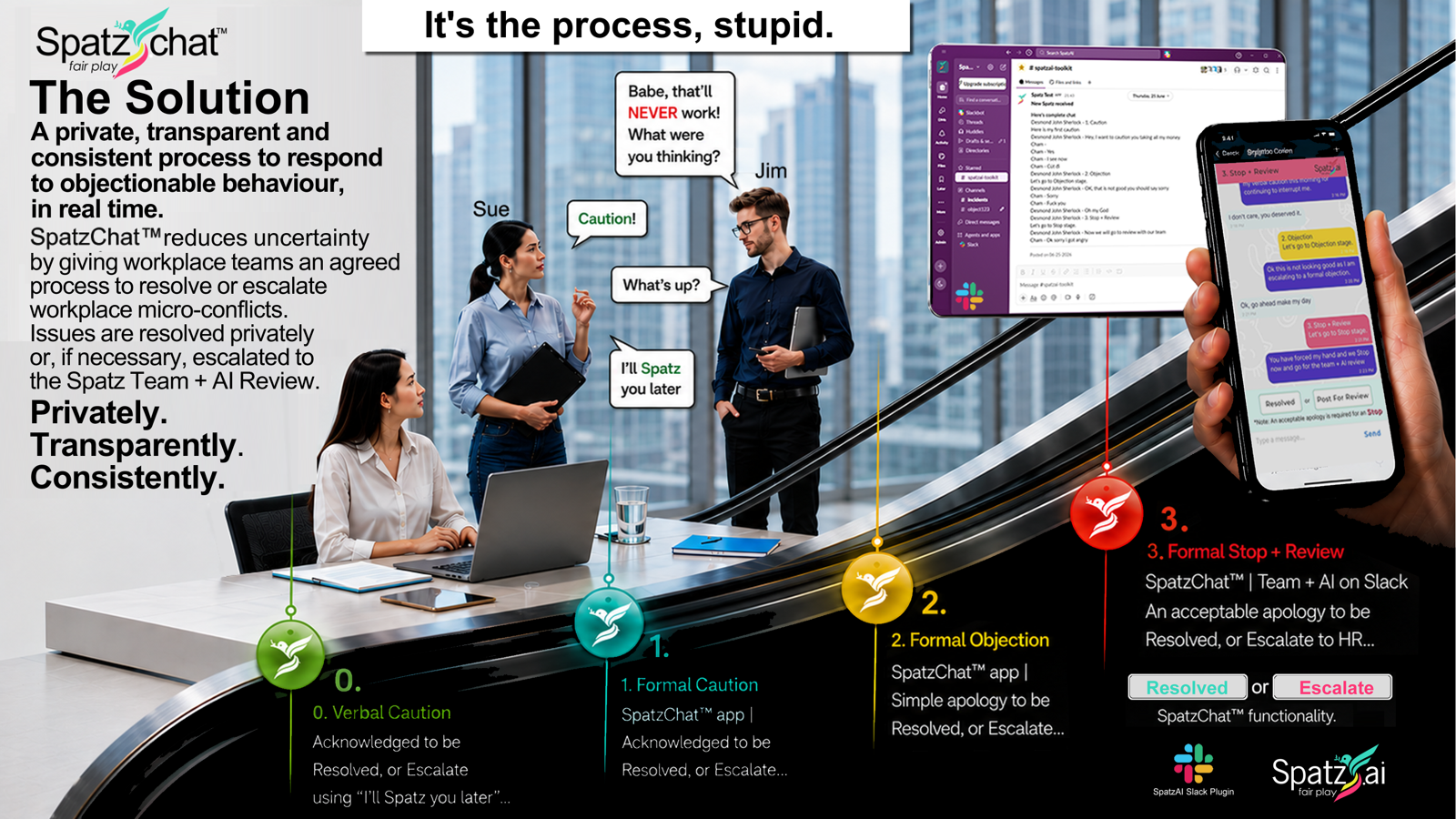
A good process should make it safe to raise concerns early, while making it fair for the other person to respond:
Privately.
Transparently, and
Consistently.
It should encourage clarification before accusation, explanation before judgement, and resolution before escalation.
If people trust the process, they’re more likely to speak up.
If the process is fair, accountability no longer feels like punishment. It becomes simply taking proportionate responsibility within an agreed framework.
Perhaps we’ve been trying to balance psychological safety and accountability when, in reality, they are both products of something more fundamental.
It’s the process, stupid.
Get the process right, and psychological safety doesn’t have to come at the expense of accountability.
It enables it.
And perhaps that’s the blind spot in many workplace culture initiatives: we spend enormous effort teaching people what good behaviour looks like, but far less effort agreeing on how to respond when it doesn’t go so well. Without that shared process, safety and accountability are left competing, when they should be reinforcing one another.
 Object123
Leave a comment