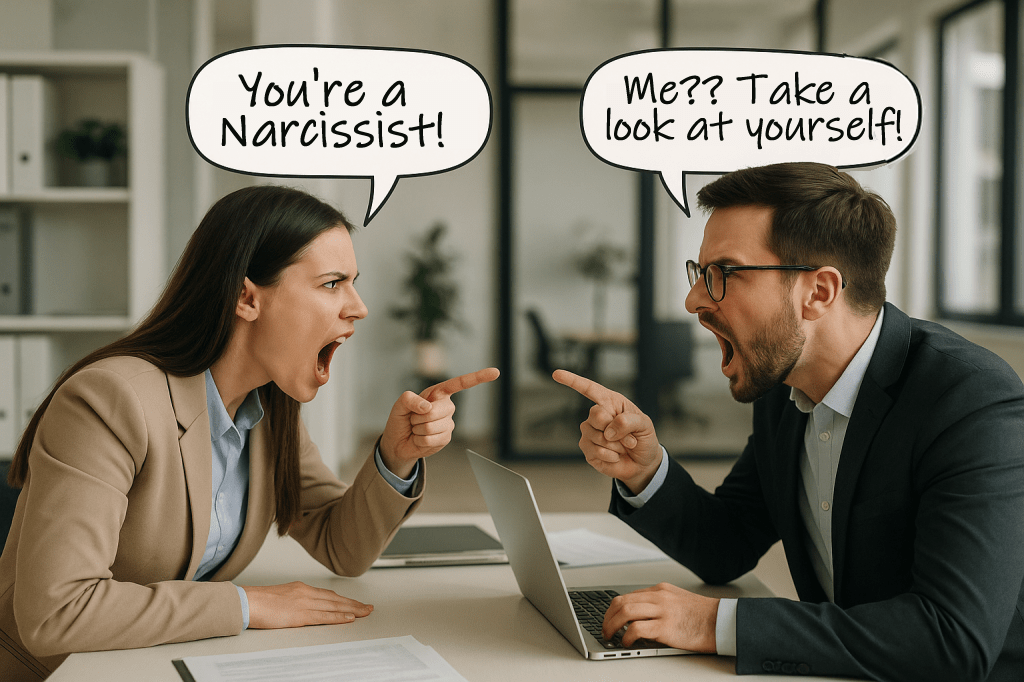
In many workplaces today, and especially on LinkedIn, the word narcissist gets tossed around like confetti.
It seems that everyone has an opinion on fellow team members’ mental health now.
A teammate pushes back on an idea? “Classic narcissist.”
A manager insists on a deadline? “Total narcissist.”
Most of these snap judgements aren’t clinical insight, they’re armchair diagnoses.
And once that label is out there, the conversation stops being about what actually happened.
It becomes personal, polarizing, and unfair, playing the man and not the ball.
Ironically, the urge to brand someone as disordered can be just as self-centred as the behavior it claims to expose.
It gives the accuser a rush of moral superiority while leaving the team no closer to resolving the real issue, ie. the specific behavior that triggered the conflict.
That’s why I built SpatzAI.
Instead of labelling the person, SpatzAI helps teams name the behavior as it happens.
A colleague interrupts?
You raise a verbal Caution.
If the caution is ignored or challenged?
You issue a formal Caution using the SpatzChat app.
If unresolved, then issue a formal Objection
If it still isn’t resolved, you send a formal Stop and get the team and AI to review the incident together.
By sticking to observable actions, not personality profiles, SpatzAI keeps everyone on equal footing.
It turns what could become a toxic accusation loop into a structured, fair process for addressing micro-conflicts in real-time.
Before we reach for labels like “narcissist,” let’s remember: most workplace tensions aren’t mental-health disorders.
They’re behaviors that can be discussed, corrected, and moved past.
Let’s replace the amateur diagnosing trend with objective, behavior-based conversation.
That’s how teams build fairness, and that’s the future SpatzAI is aiming for.
 Object123
Leave a comment