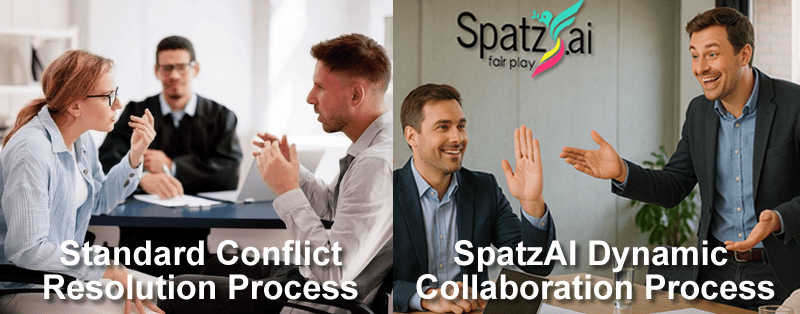
Picture two work colleagues locked in a simmering altercation.
Their spat drags on for weeks, finally reaching HR and senior management. Meetings are scheduled, statements are taken, emotions harden. By the time the official “resolution” arrives, the energy that once drove their work is long gone, trust has eroded, and collaboration has been compromised.
Now ask yourself: what are the odds that these two will immediately slip back into a healthy, creative working rhythm without further friction? I’d say close to zero. Traditional conflict-resolution processes tend to come in (too) late, after the damage is done.
That’s why I believe the real opportunity isn’t to resolve conflicts after they’ve escalated, but to keep them from escalating into toxic conflicts in the first place.
Enter SpatzAI: from “putting out the fire” to “keeping the flow moving”
Instead of waiting for tempers to flare and formal channels to be triggered, SpatzAI lets any team member flag a micro-conflict the moment it sparks. A quick verbal caution, and if unresolved, use the team’s SpatzChat 3-step app, ie. Caution → Objection → Stop sequence, handled one-on-one to help resolve their spat. And if still unresolved, use the Spatz Team and AI Review (STAIR) platform to help resolve the issue, and move on before resentment calcifies.
Instant accountability: minor slights or unfair feedback can be surfaced in seconds, not weeks, thus allowing for dynamic collaboration on-the-fly.
- Fair-play guardrails: everyone works from the same team charter and playbook, so the focus stays on behavior, not personalities.
- Team-assisted review: if things stall, the dispute can be referred to the wider team through SpatzAI Team Review without dragging in HR or management.
- Dynamic collaboration: instead of an atmosphere of complaint and retaliation, the team learns to course-correct on the fly, turning flashpoints into opportunities for tighter cooperation.
The difference is night and day: rather than trying to repair broken relationships after a formal process, teams stay in a state of dynamic collaboration, addressing friction as it arises, keeping trust intact, and preserving their creative momentum.
 Object123
Leave a comment