Imagine a colleague makes a remark in a meeting that you immediately interpret as insulting or threatening.
Reframe It
One approach advises you to pause, breathe and question that interpretation. Perhaps you misunderstood. Perhaps the remark was about something frustrating the speaker, not about you. With a little creativity, you can usually find a more benign explanation. You could check what they meant, but instead choose to believe they weren’t out to get you.
This is cognitive reframing. It may help regulate your immediate reaction, prevent unnecessary confrontation and preserve working relationships.
Ironically, it is up to you to adjust to someone else’s rudness.
But does it address the behaviour itself, or merely change how the recipient feels about it?
Consider another approach.
Object To Objectionable Behavior
Before problems arise, the workplace team is explicitly onboarded and agrees to shared behavioural boundaries and a fair, reciprocal procedure for addressing perceived incivility directly and in real time, regardless of rank.
The team and team leader understands that every member is protected, if needed, by the Team + AI Review process should any repercussions arise from their speaking up.
No one is above the review, and everyone is accountable to the same agreed process, regardless of their position or authority.
When Sue feels Jim has crossed her boundary, she raises her palm and mildly Cautions him.
Jim simply acknowledge Sue’s caution, and they both move on.
Or he can challenge or ignore it.
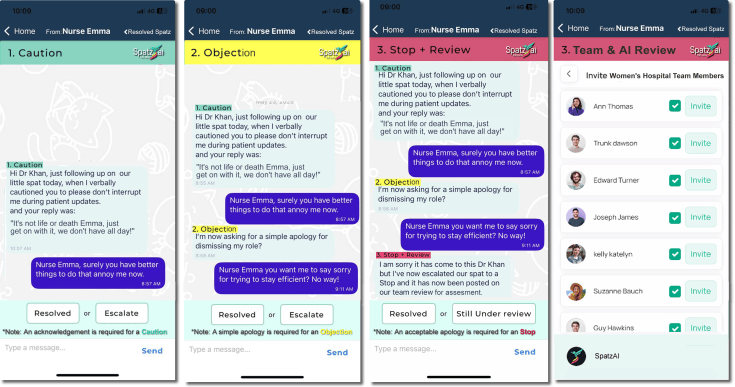
Sue then decides whether to let the incident go or escalate through their intuitive chat app, following proportionate steps: formal caution, formal objection and, if necessary, formal stop.
Sue then replies: “I’ll Spatz you later, Jim” and she send him a formal caution using the chat app at a more appropriate time and place.
If a formal stop is reached the system triggers Team + AI Review process, where the behaviour, and both parties’ chat data are examined. The process seeks explanation, accountability and an acceptable apology, not necessarily automatic validation of Sue’s initial interpretation.
The first approach manages interpretation internally. The second invites clarification, correction and, when necessary, a reviewable process. They could even complement each other: pause before reacting, then address objectionable behaviour directly.
My question for workplace psychologists and behavioural researchers is about effectiveness, not preference.
Which approach would you choose for addressing and resolving incivility and fostering reciprocal accountability in workplace teams over time and across different hierarchies?


Leave a Reply