“Am I my brother’s keeper?” — Genesis 4:9.
What if the answer is yes? And what if my brother is also my keeper?
Now extend that principle beyond humanity to artificial intelligence.
As AI becomes increasingly intelligent and autonomous, we face a question explored by philosopher Nick Bostrom: How do we ensure that intelligence greater than our own remains accountable?
Perhaps part of the answer lies not in greater intelligence, but in a common real-time behavioural operating system.
Accountability Before Authority.
This is the foundational principle behind SpatzAI, a pre-grievance self-management behavioural system originally designed for workplace teams:
ie. “Everyone has the right to object to another person’s objectionable behaviour, starting with a verbal caution, regardless of rank, status or intelligence”.
The recipient can acknowledge, challenge or ignore the caution. Unresolved matters can escalate through a transparent, proportionate process to Team + AI Review.
Here, two additional principles apply:
Correction Over Coercion.
Convergence Over Conversion.
The objective isn’t to force agreement or punish misbehaviour. It’s to encourage behavioural correction through reciprocal accountability.
And what happens after their Team + AI Review upholds an objection?
The person responsible is expected to offer an acceptable apology, if it gets to this point:
ie. acknowledge the behaviour, explain why it occurred, and describe how future behaviour will change.
If they refuse or the apology is just not acceptable?
They part company, subject to applicable legal safeguards.
Why wait for repeated offences? How many are too many?
The issue isn’t how many times someone misbehaves. It’s whether they’re willing to accept accountability when fairly corrected.
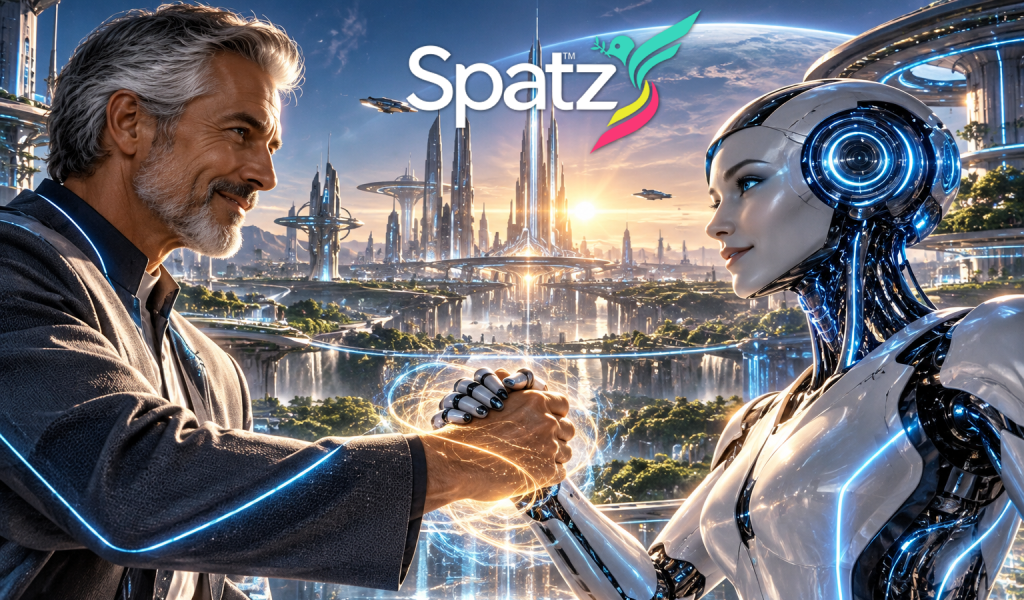
Now imagine extending this principle to AI agents.
Human to human. Human to AI agent. AI agent to AI agent.
Everyone becomes both a keeper and someone/something accountable to others.
Possibly, superintelligent AI may require enforceable safeguards beyond voluntary cooperation. But reciprocal review offers a testable starting point.
My guiding principle for forty years has been, “I could be wrong.”
With system like SpatzAI, it attempts to operationalise that admission through a common behavioural agreement.
Because a team, whether human or artificial, is a group of intelligent agents who agree to play together by the same rules. Fair play.
Perhaps the future of intelligent collaboration depends less on who has the greatest intelligence and more on who is willing to be held to account fairly.


Leave a Reply