Maybe we’ve been asking the wrong question.
For years, the discussion has been about Artificial General Intelligence.
Can we build it?
When will it arrive?
How will we know?
But perhaps the future of intelligence is not really about whether it is artificial.
Perhaps the future of general intelligence is being observable.
Instead of asking whether a human or an AI is generally intelligent, we can ask:
What does its general behaviour show?
Does it listen?
Does it reason fairly?
Does it acknowledge uncertainty?
Does it recognise bias, especially its own?
Does it avoid fallacies?
Does it recalibrate easily and quickly when fairly challenged?
In workplace teams, intelligence is not demonstrated by claiming to be right. It is demonstrated through observable behaviour: how people disagree, how they respond to cautions, how they repair mistakes, and how they adjust when their behaviour is reviewed.
The same could apply to AI.
If an AI displays bias, dogmatism, or fallacious reasoning, that behaviour can be observed. If it acknowledges the issue and recalibrates, that can also be observed and objectively measured.
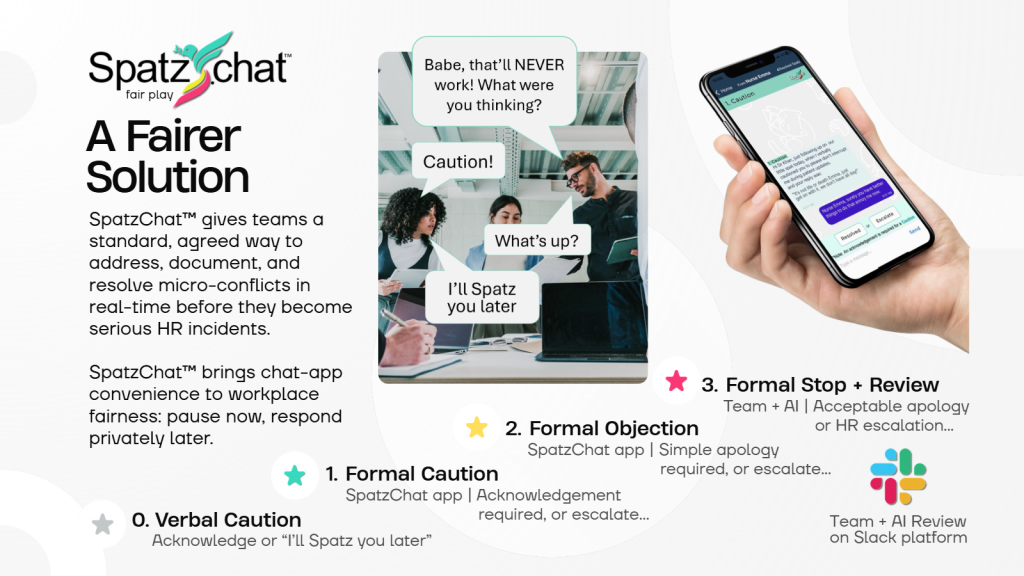
This is where SpatzAI becomes interesting.
SpatzAI provides a way to make behaviour visible, challengeable, and reviewable.
Not to judge the person.
Not to judge the machine.
But to examine the behaviour.
Maybe general intelligence is not something we simply declare.
Maybe it is something we observe over time.
Maybe the future of intelligence is not Artificial.
Maybe it is Observable when we make it so.


Leave a comment