
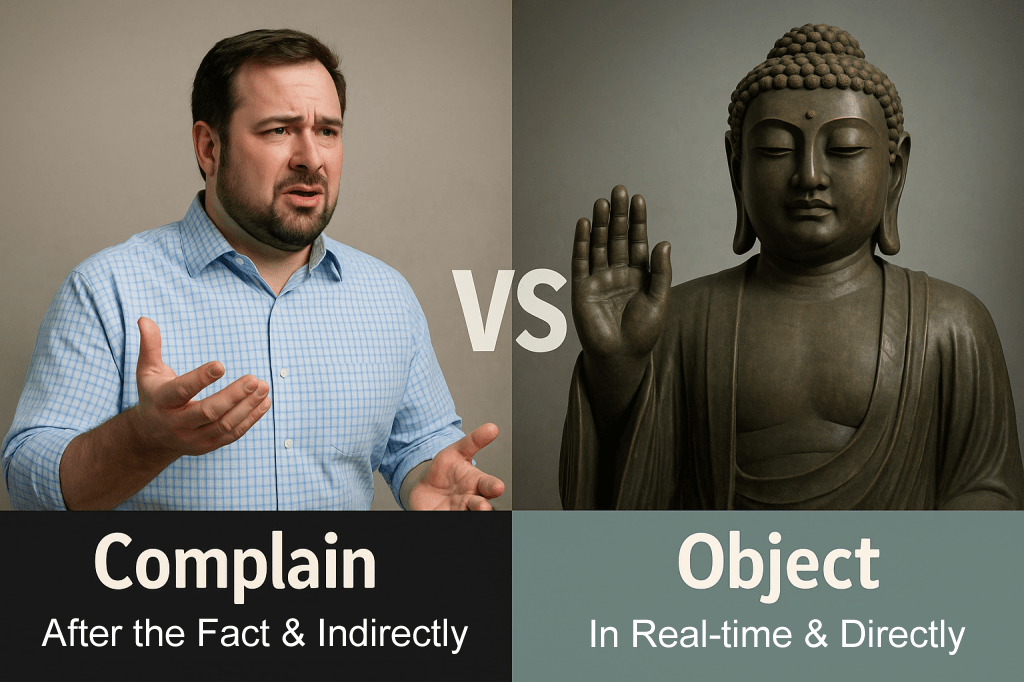
I agree with neuroscientists suggesting the negative effects of complaining: it drains energy, breeds resentment, and often changes nothing.
But not many people know that there is a responsible way to complain. It’s called objecting.
So what’s the difference between the two? The answer might surprise you.
Complaining is emotional release without responsibility. It points fingers, often to vent rather than to fix. It focuses on what’s wrong and expects someone else to make it right.
A simple caveat — complaining is usually after the fact and indirect. It happens when the moment to address the issue has already passed.
Objecting, on the other hand, is intentional. It’s the act of standing up for fairness — not against someone, but against an idea, behavior, or process that feels wrong or unreasonable.
Objecting is usually in real time and direct, aiming to restore balance before the issue grows.
When you complain, you spread the problem.
When you object, you start to solve it.
That’s why in SpatzAI, we teach teams to object, not complain, to transform frustration into fair feedback, and emotional signals into improvement data.
 Object123
Leave a comment