It seems that most organization consultants and psychology experts on Linkedin talk about respect in teams. From HR manuals to corporate slogans, the message hasn’t changed for millennia: treat people with respect. Also, ask anyone on the street and they’ll agree, respect of our fellow man is crucial.
And yet, for all this rhetoric disrespect and uncivil behavior is ubiquitous still in the workplace and costing billions in loss of productivity.
Perhaps the real breakthrough won’t come from repeating the same platitudes over and over on how important respect is, but from learning how to respond when disrespect starts to rear its ugly head?
Because that’s where teams stumble. We don’t fall when respect is present; we fall when it’s lost, when someone’s tone cuts too deep, when dignity is dented, when disagreement turns into dismissal. Maybe the real challenge isn’t about preaching more respect, but addressing disrespect fairly, without blame, tit-for-tat, or silence.
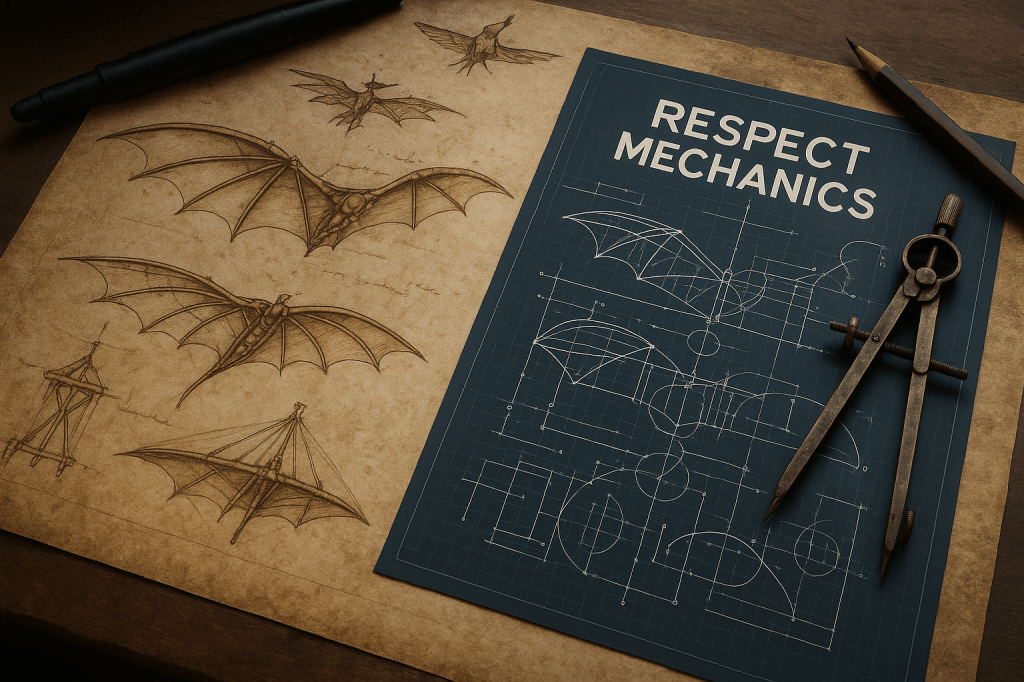
It reminds me of how humans once looked at birds, mesmerized by their effortless flight. For thousands of years, artists admired it, wrote about it, and dreamed of it. But admiration didn’t make us airborne. Only when two bicycle mechanics decided to study the mechanics of failure — of lift, drag, and balance — did humanity finally take flight.
Maybe respect is the same. We’ve admired it for ages, but rarely engineered systems to repair or correct it in real-time, when it starts to falter.
That’s where SpatzAI comes in, not to remind us to “be respectful,” but to give us the tools to address fairly, when we are entering into disrespect, and before spiraling into a tailspin. It’s not about moralizing respect; it’s about how to course-correct during turbulence.
Perhaps, one day, respect will finally take flight, not through aspiration, but through design.
 Object123
Leave a comment