
Micro-aggressions, those subtle slights like a sarcastic or dogmatic (I am right you, are wrong) tone, an eye-roll, or a dismissive interruption, may appear trivial in isolation. But in practice, they can sting, chip away at trust, and quietly derail collaboration, leading to uncertainty and indecision.
The real challenge is how people react to micro-aggression. Targets often respond in kind, eventually snapping back, withdrawing, or escalating the tension. What began as a “minor” moment can spiral into minor spats and eventually conflict, leaving both sides feeling misunderstood.
This is where SpatzAI steps in. Instead of leaving teams to guess whether a micro-aggression is “serious enough” to report, SpatzAI provides a proportionate way to self-manage and address the micro-conflicts they can spark. Here’s how:
0. Verbal Caution — Feelings Matter (Green):
Micro-aggressions are treated as valid entry points. If a behavior feels unfair or overly dogmatic, it deserves attention before it grows. Enter with the agreed Verbal Caution and a simple acknowledgement is required, “Yep, that was out of line”.
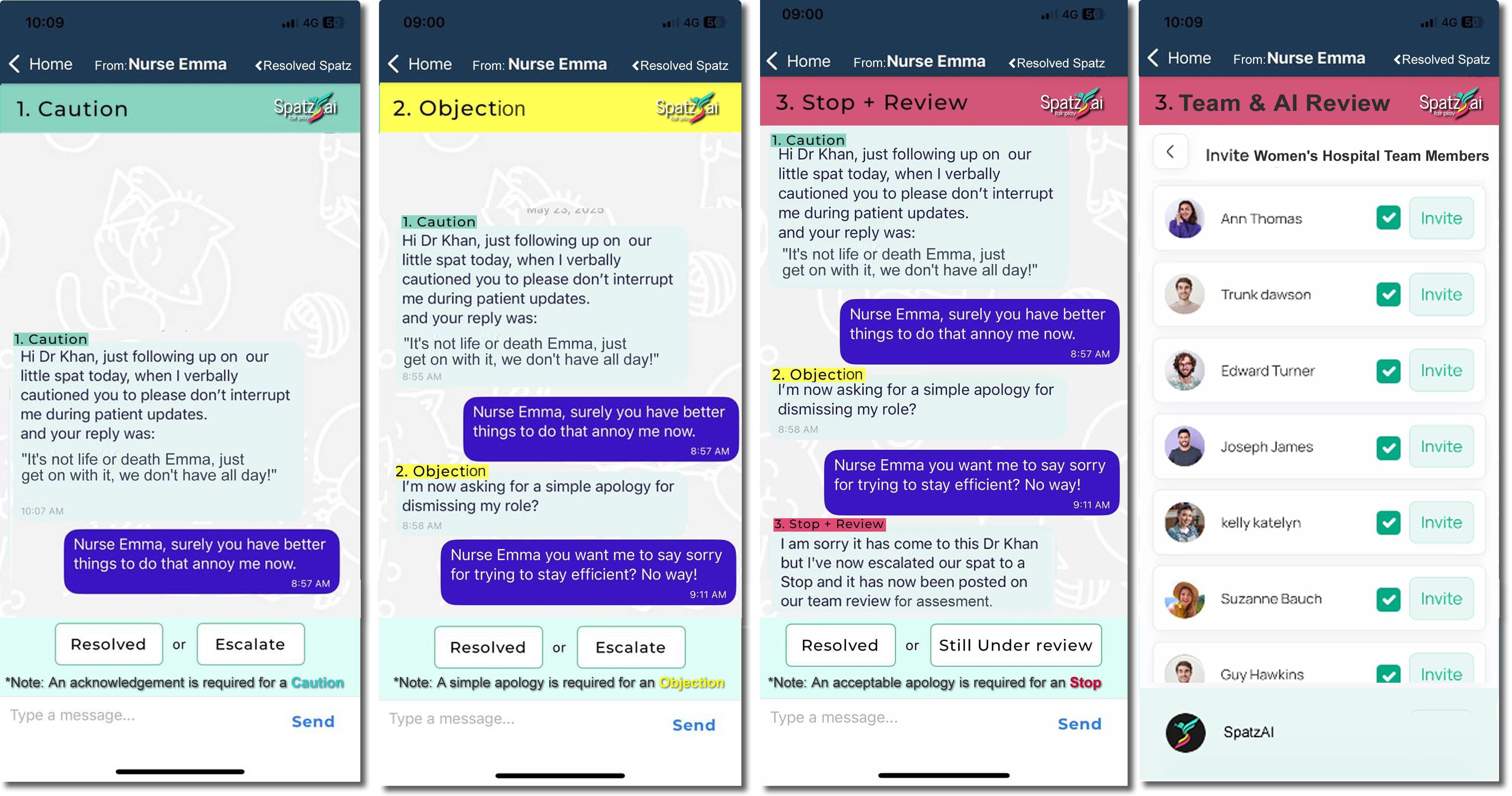
1. Formal Caution — At an Appropriate Time (Green):
If the verbal caution is dismissed or challenged the affected person can follow up with the SpatzChat app, informing the offending team mate she will Spatz him later, by starting the documentation process. And like any messaging app, it can be done at a more convenient time for both. An acknowledgement reply is required, prompted by the Spatz app.
2. Formal Objection — Escalation (Yellow):
If still unresolved, the spat can be escalated to a dispute, using a formal objection. Now a simple apology is required, short and constructive, as part of the agreed team charter: “Sorry for my overly dogmatic tone”
3. Formal Stop — Automatically Posted on the Team Review Platform (Red):
If the objection is dismissed, the issue escalates to a Stop. The team, through the Spatz Team and AI Review (STAIR) platform, weighs up the behavior together. It shifts the focus from potential personal biases and grievances, to a more transparent, peer review fairness.
Team-Level Learning
Each incident builds collective awareness and AI LLM learning. Over time, patterns become visible: which teams resolve issues early and at what level? What context causes the issues? The length of time it takes to resolve? etc. etc. This allows the organization or investors to predict beforehand the potential success of failure of teams, and allows them to intervene when necessary.
From Ambiguity to Accountability
Micro-aggressions thrive in the shadows of ambiguity and opacity. By shining a light on them with a simple, agreed structured process, SpatzAI empowers teams to address the micro-conflicts that they cause; early, fairly, and proportionately. Instead of reacting in kind, teammates can respond with clarity, restoring effective teamwork and collaboration.
 Object123
Leave a comment