
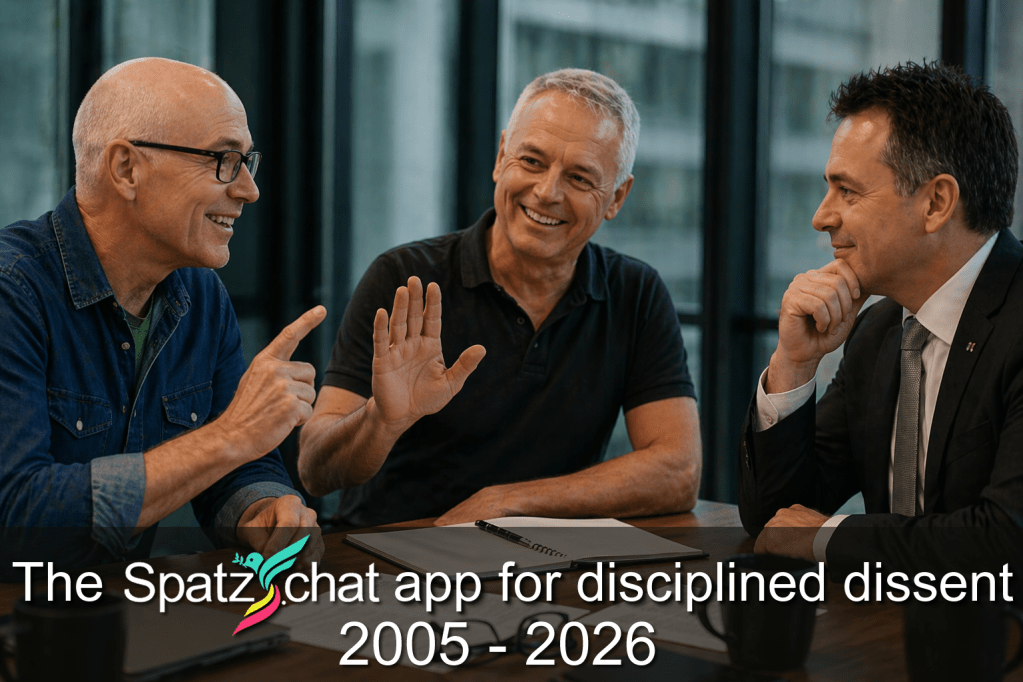
I think many workplace stories about “speaking up and getting into trouble” miss a key point. The issue is not always that someone dissented, but how that dissent was delivered and how the team members or management were set up to receive it.
Over 20 years ago, I was in a travel startup meeting with my brother and a well-known industry advisor. We were discussing a potential investor relationship. I raised a concern, bluntly, saying “we should warn them (the investors) about us.” In my view, we were not well matched.
The response was immediate. I was labelled a “loose cannon” by our advisor, and my brother concurred. I withdrew, feeling like a victim and the odd one out. The investment went ahead without my input. Two years later, we lost everything, due to our initial deal, which was poorly structured with the same investors.
Looking back, I don’t think the failure was that I spoke up and was talked down to. I think the real failure was that we had no agreed way to dissent.
There was:
- No shared protocol for raising concerns
- No structure for challenging how those concerns were delivered, in real time
- No agreed form of acknowledgment or response for accountability
- No pathway for resolving the friction constructively
So my dissent was treated as a personal liability, rather than something to be addressed professionally, and was ultimately suppressed.
It was friction that I felt, being labeled a loose cannon, and friction for them, hearing my concern blurted out without any agreed protocol for how such dissent should be raised and addressed.
I think this still happens today. People believe they are dissenting “fairly,” yet others experience it as disruptive, mistimed, or poorly delivered. Without a shared process, both sides can feel justified in their position and hard done by in the outcome.
That is one reason so many workplace stories end up framed in terms of bullies, victims, and unfair treatment. There are usually two sides to the story, yet no agreed forum or process for raising, testing, and resolving dissenting views professionally in real-time.
The discipline is not just in how dissent is delivered, but in agreeing in advance how dissent will be handled.
Jim Collins emphasizes that disciplined teams are crucial for organizational success. He believes in hiring self-motivated individuals, aligning them with a clear vision, and empowering them to take disciplined actions. This focus and consistency drive long-term excellence
Jim Collins on discipline, author of Good to Great:
That is the gap that the SpatzChat™ app has been specifically designed for, to directly address this type of situation.
The SpatzChat™ is not just a messaging toolkit. It is a disciplined dissenting system. It allows team members to:
- Understand and Agree to the process before engaging in any difficult conversations.
- Raise concerns in real-time, using a simple, recognized structure (initial verbal caution).
- Use the SpatzChat™ app, initiated after, when convenient, if the caution is ignored or challenged.
- Escalate through the 3-steps nudged-on by the app and document when still unresolved.
- Finally, resolve the issue through the transparent, Spatz Team and AI Review process.
The goal is not to encourage more dissent for its own sake. It is to ensure that dissent is:
- Prepared for fairly.
- Structured fairly.
- Protected fairly. and
- Resolved fairly
I think the ultimate discipline in dissent is not just in how one speaks up, but in agreeing in advance how dissent will be handled.
I believe that without that agreement, dissent can feel like disruption. With it, dissent becomes a tool for better decisions.
SpatzChat™ aims to make that shift practical, in real-time and direct.


Leave a Reply