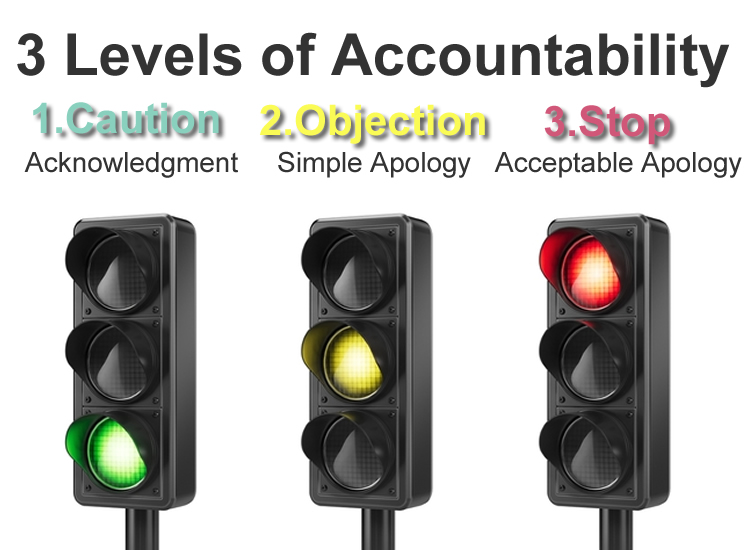
Psychological safety without accountability is like a major intersection without traffic lights: everyone can enter, but right-of-way is unclear, and outcomes depend on assertiveness, timing, and luck rather than agreed rules.
Many workplaces try to build psychological safety by encouraging people to speak up. That is valuable, but it can drift into a subtle problem: “say anything, any way.” When delivery is careless, coercive, or dismissive, the team pays a price. People start hesitating, second-guessing, withdrawing, or escalating. The room stays “open,” but it stops being safe.
The standard, widely cited definition (Amy Edmondson) is: team psychological safety is “a shared belief that the team is safe for interpersonal risk taking.”
That definition explains this predicament because “safe” is about freedom from humiliation, rejection, or punishment for speaking up, not freedom from being held accountable for the impact of one’s behavior. When teams (or leaders) compress the idea into “everyone can say anything,” psychological safety gets mistaken for comfort, permission, or consequence-free expression.
In practice, the mismatch shows up like this:
- Psychological safety protects the act of speaking up (questions, concerns, dissent, admitting mistakes).
- It does not remove the need for standards about how people speak (tone, coercion, dogmatic rhetoric, disrespect, manipulation).
- Without an agreed accountability mechanism, the loudest or most forceful delivery can dominate, and quieter members learn that speaking up is “allowed” in theory but costly in reality.
- Edmondson has repeatedly noted the concept is often misunderstood; it is compatible with discomfort, candid disagreement, and high standards, rather than being “niceness” or low urgency.
So the predicament is built into the phrasing: “safe for interpersonal risk” can be misread as “safe from interpersonal correction.” The fix is to pair the definition with an explicit norm: speak up is protected; delivery is accountable.
Accountability is the missing mechanism. Not punishment. Not hierarchy. A shared obligation to answer for how we speak while we decide together. In healthy teams, that obligation is procedural, not personal. It is agreed in advance, applied proportionately, and anchored to observable behaviour rather than labels.
SpatzAI is designed to supply that accountability at the moment it matters: during live interaction. It gives teams a simple, consistent way to flag and address objectionable delivery in real time, without shutting down the content of what is being said. Think of it as traffic control for collaboration: clear signals, predictable right-of-way, and a safe default for when there is disagreement.
Instead of storing up frustration for surveys, HR reports, or post-mortems months later, teams can course-correct in real-time, when the cost is low, and the intent is still recoverable. And when a moment cannot be resolved quickly, SpatzAI routes it into using the SpatzChat app at a convenient time and a defined team and AI review path, so the decision about “reasonableness” is not left to the loudest or most unreasonable voice.
Psychological safety scales when accountability scales with it.
Without accountability, candor becomes a cover for incivility, and clashes are inevitable

 Object123
Leave a comment