Most theories of conversation assume feedback leads to learning. Sometimes it does, but mainly when the feedback is easy to hear. This also encourages overly careful, even obsequious content that avoids saying what actually needs to be said.
When feedback is liked, learning is frictionless. When feedback is disliked or unwanted, human systems default to biology. We either fight or flight.
- Fight: defend, dismiss, counter-attack, explain why the feedback is wrong.
- Flight: withdraw, go quiet, comply without agreement, signal false alignment.
Neither is conducive to learning, with both shutting it down more so.
What is missing in most feedback models is a third, legitimate response.
Flag.
Giving receivers of feedback the option to Flag the unwanted feedback is the ability to pause an interaction and address the delivery of feedback, not its content. It is neither disagreement nor refusal. It is a request to regulate how feedback is being delivered so that optimal learning can continue.
This is where SpatzAI comes in.
SpatzAI is not a tool for giving better feedback. It is a system for responding to feedback we do not like, without escalating into personal conflict or withdrawing into silence.
It introduces a simple, proportionate structure into everyday workplace conversation:
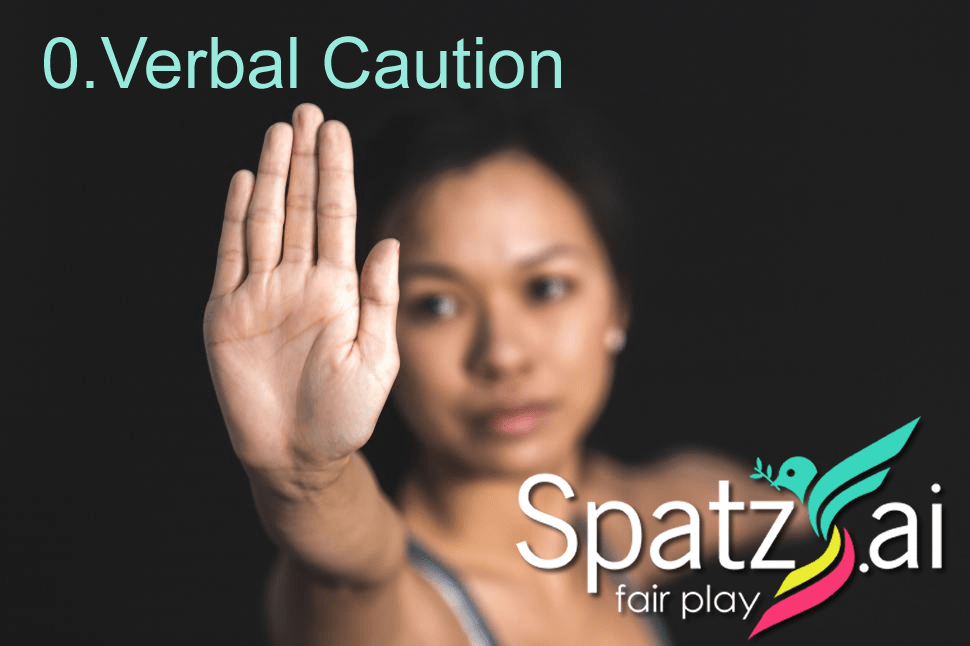
- 0. Verbal Caution (Flag): “Caution, on the following grounds of your delivery…”
- 1. Formal Caution (SpatzChat app): Verbal caution is ignored; start documenting.
- 2. Formal Objection (SpatzChat app): As the formal caution was challenged or ignored.
- 3. Formal Stop (SpatzChat app): The objection is still challenged, triggering the team + AI review.
Crucially, escalation is not triggered by disagreement. We believe disagreement is healthy. Escalation occurs only when the person offering the feedback has been flagged, and they challenge or ignore the caution. At that point, the issue is behavioral, not intellectual.
By institutionalising a Flag process, SpatzAI creates a third path where Fight and Flight once dominated. It allows team members to stay engaged with feedback that they feel is unfairly delivered, without swallowing it or weaponising it.
The result is not harmony or agreement. It is something more useful: sustainable disagreement.
SpatzAI treats conversation as a feedback system that needs regulation at the moment discomfort appears, not after the damage is done. In doing so, it restores learning to the very situations where it usually collapses.
That is not conversion or converting.
It is convergence or converging, by design.
 Object123
Leave a comment