SpatzAI is a real-time micro-conflict resolution platform designed to help teams address and resolve minor workplace spats before they escalate into disputes or conflicts. It combines a structured messaging app to capture team data, along with the Spatz Team & AI Review (STAIR) platform, which holds team members accountable through transparency, creating fairness and psychological safety.
🛠 What SpatzAI Does
SpatzAI is built around the idea that most (if not all) workplace conflicts start small, as one-on-one ignored frustrations, snide remarks, or miscommunications, that escalate. So, instead of waiting for issues to snowball uncontrollably, SpatzAI offers a structured and proactive approach to addressing team spats in real-time. SpatzAI consists of:
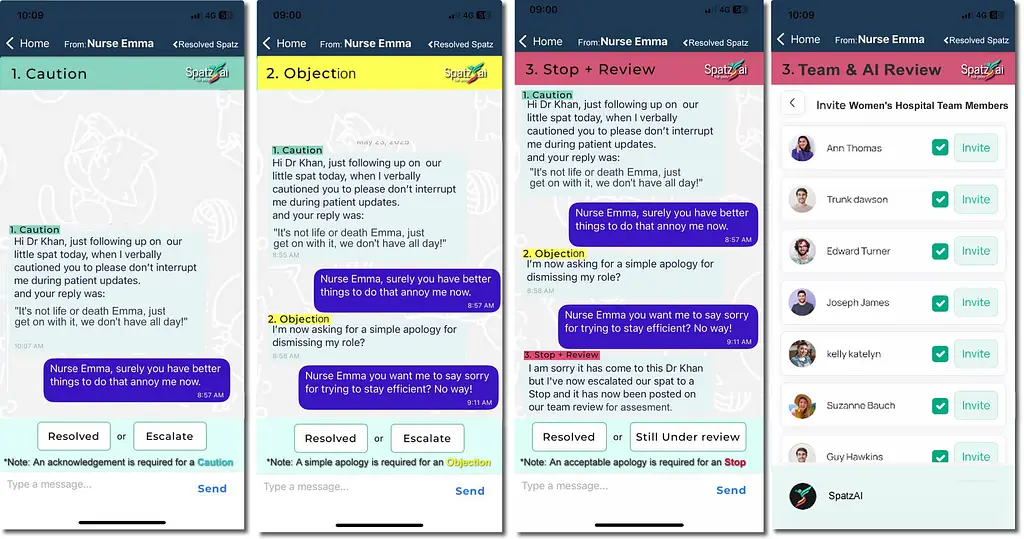
- SpatzChat™: A messaging app that guides users through a 3-step process to document and resolve minor spats.
- Spatz Team Charter Agreement: A shared behavioral framework that sets expectations for respectful communication.
- Spatz Team and AI Review Platform: Uses the team and machine learning to assist in reviewing unresolved minor conflicts, suggesting fair resolutions.
- Spatz Team LLM Data and AI: Uses the data (especially time delay) to help organizations predict the future success or failure of their teams.
- Slack & MS Teams Integration: Seamlessly fits into existing team workflows.
🔄 The 3-Step Micro-Conflict Resolution Process in a Nutshell
SpatzAI categorizes four levels of micro-conflict and suitable accountability:
0. Verbal Caution (Pause) – An informal and gentle nudge to course-correct behavior.
1. Formal Caution (Spat) – Logged concerns on the SpatzChat app requiring an acknowledgment.
2. Formal Objection (Dispute) – Logged escalation on the SpatzChat app, requiring a simple apology.
3. Formal Stop (Conflict) – More serious escalation to peer review or team-wide vote if needed, and
requiring an acceptable apology.
🌍 Who It’s For
SpatzAI is ideal for:
- Creative and remote teams where bold ideas and diverse voices need protection.
- Regulated industries like tech, healthcare, and education, where psychological safety is critical.
- Organizations under psychosocial safety mandates, looking to prevent bullying and disengagement.
💡 Why It Matters
Traditional conflict resolution is often reactive, hierarchical, and slow. SpatzAI flips that model by:
- Empowering team members and their peers to resolve issues directly and in real-time.
- Preventing memory distortion through real-time documentation using the SpatzChat app.
- Promoting objecting (real-time and direct) NOT complaining (after the fact and indirect), and focusing on behavior rather than personal attacks (playing the ball, not the person).

🧭 How SpatzAI Works in Practice
1. Team Charter Setup
Before any conflict resolution begins, the team agrees on using the Spatz Team Charter and Playbook,
a shared behavioral framework. This includes:
- Expectations for respectful communication
- Guidelines for giving and receiving feedback
- Definitions, examples for what constitutes a “spat,” “objection,” or “conflict”, etc. etc.
This charter acts like a social contract, giving everyone a common language and baseline for behavior, with rules of engagement and disengagement.
2. Spatz Chat™: Real-Time Micro-Conflict Logging With Team Member
When a team member feels uncomfortable by what a fellow member said or implied, they can initiate a Verbal Caution.
Think of it like using your car’s horn to warn a fellow driver of an impending collision or a referee’s whistle. If ignored or challenged then the SpatzChat™ can be invoked at an appropriate time.
It’s a structured 3-step process:
Step 0: Pause – Ripple
- A gentle verbal Caution or message like “Caution: that felt off.”
- No formal logging, just a nudge to course-correct. If ignored…
Step 1: Formal Caution – Spat
- If the behavior continues, the user logs a “Spatz” in the system.
- The person involved is notified and asked to acknowledge the concern.
- This creates a timestamped record, preventing memory distortion later.
Step 2: Formal Objection – Dispute
- If the spat isn’t resolved, it escalates to an “Objection.”
- The team member explains why the behavior violates the charter.
- If still unresolved, step 3 is invoked.
Step 3: Formal Stop – Micro-Conflict: Posted on the Spatz Team & AI Review (STAIR) Platform
If a dispute reaches the “Micro-Conflict” level:
- SpatzAI’s machine learning engine analyzes the language, tone, and context.
- It suggests fair outcomes based on precedent and team norms.
- Fellow team members also contribute to help resolve the issue and may vote if necessary.
4. LLM Data Collection
Data gathered from all Spatz-enabled teams can be analyzed to correlate each team’s success with its conflict-resolution effectiveness, using these KPIs to help predict the team’s future likelihood of success or failure across the organization.
5. Integration & Workflow
SpatzAI would integrate with tools like:
- Slack
- Microsoft Teams
- Google Workspace
This means you can log a spat or objection without leaving your daily workflow.
🧠 Why It Works
- Prevents unruly escalation by strategically catching issues in real-time.
- Builds trust through transparency and fairness.
- Empowers individuals to speak up without fear, knowing their team has their back.
- Reduces HR and managerial burden by decentralizing conflict resolution at the micro-conflict level.
 Object123
Leave a comment