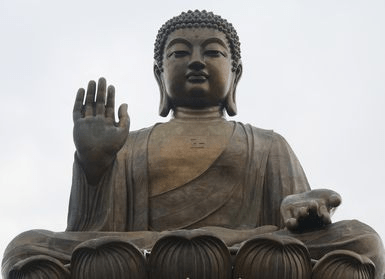
In most innovative and creative work environments disagreements and resultant untoward behavior are inevitable. But what if we approached these micro-conflicts with the same wisdom and compassion the Buddha embodied in his Abhaya Mudra? This gesture of caution for protection, with the right hand raised and the left hand resting palm-up, symbolizing guidance. Applying this mindset to team dynamics could foster an environment where micro-conflicts are addressed calmly and constructively.
This is where SpatzAI comes in. Much like the Buddha’s teachings, SpatzAI promotes psychological safety within teams by empowering teams to calmly address minor untoward behavior before it can escalate and become toxic. It ensures that conflicts focus on both what is being said and how it’s being delivered, creating a pause for respectful dialogue about one’s behavior by using a calm caution, when necessary.
The Abhaya Mudra: A Model for Conflict Resolution
The Abhaya Mudra symbolizes “fearlessness” and “protection,” offering a powerful metaphor for leaders and teams to follow. This approach handles disagreements with calm reassurance, fostering a sense of safety. Similarly, SpatzAI allows team members to pause conversations when tensions rise, offering them the space to address issues without fear of repercussions.
SpatzAI’s Three-Step Process
SpatzAI’s process mirrors the protection of the Abhaya Mudra. It starts with teams agreeing to use the Spatz charter. Then, a 0. Verbal Caution, is used when a team member detects unfair behavior allowing team members to pause and address problematic behavior gently. If the verbal caution is ignored, the spat moves to an 1. Official Caution using the Spatz Chat app. If still ignored or challenged, an 2. Official Objection is raised, requiring a simple apology. Finally, if unresolved, an 3. Official Stop escalates the micro-conflict to the peer review process using the Spatz Team-assist review platform and the Spatz AI to guide the resolution.
Cultivating Fearlessness in Teams
Like the Buddha’s mudra, SpatzAI promotes fairness by providing psychological safety. Team members are encouraged to speak up, knowing their input will be respected and their concerns will be addressed. This system reduces uncertainty and strengthens team dynamics, knowing their issue will be resolved.
Conclusion
Both the Buddha’s Abhaya Mudra and SpatzAI offer valuable lessons: peace is not the absence of conflict but the ability to navigate it with compassion and discipline. By blending ancient wisdom with modern technology, teams can create a safe environment where micro-conflicts or spats lead to growth and collaboration rather than toxic stand-offs.
 Object123