In the realm of teamwork and collaboration, the balance between certainty and uncertainty can often be the determining factor in a team’s success or failure. While we tend to associate uncertainty with chaos and instability, it’s crucial to recognize that an excess of certainty, bordering on dogmatism, can be equally detrimental. This insight stems from research conducted in the paper titled “The Dynamics of Micro-Conflicts and Uncertainty in Successful and Unsuccessful Design Teams.”
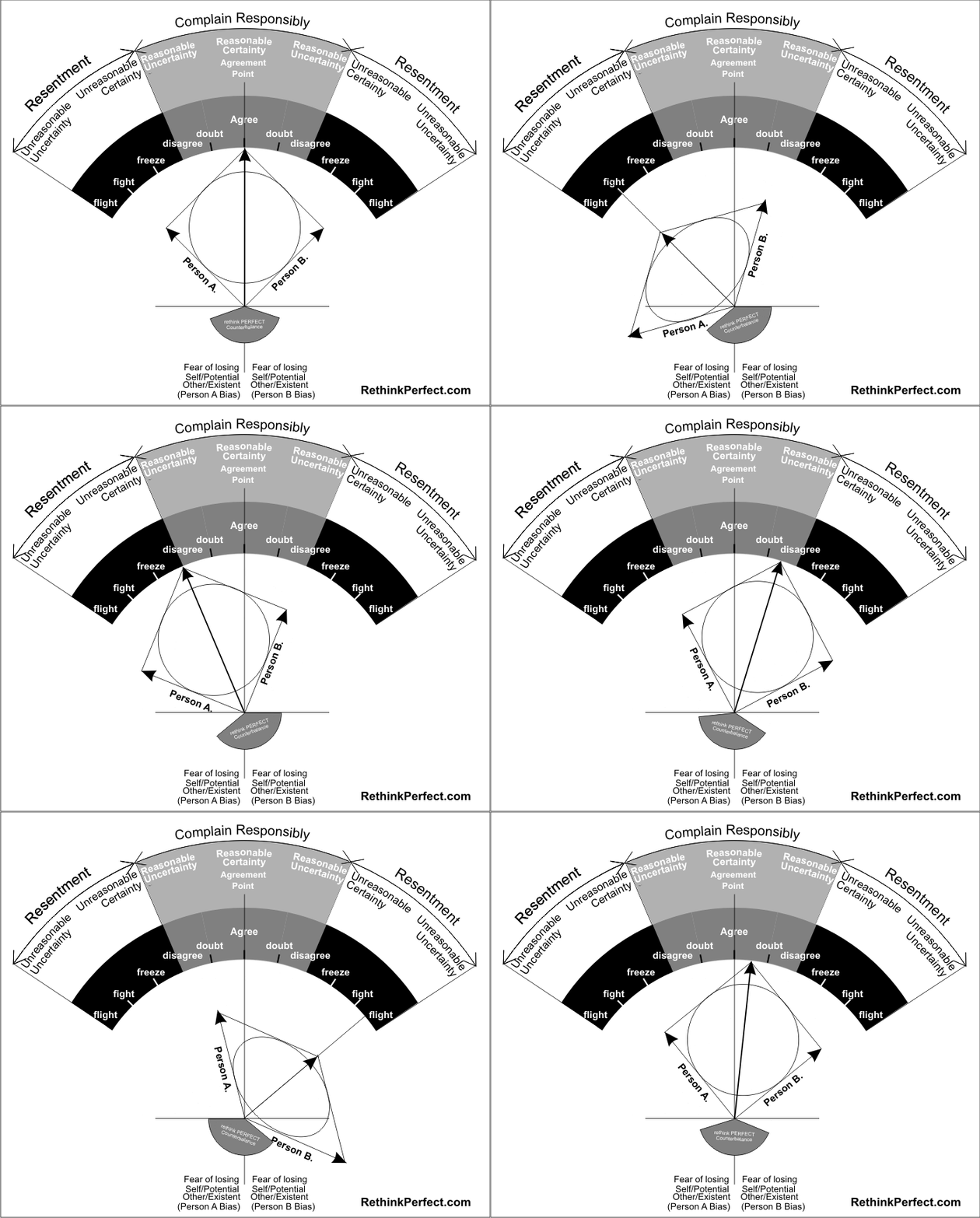
The findings of this research shed light on the intricate relationship between micro-conflicts, certainty, and uncertainty within teams. In successful design teams, the resolution of micro-conflicts led to a relative reduction in uncertainty among team members. On the flip side, in unsuccessful design teams, uncertainty tended to rise after these micro-conflicts remained unresolved. These observations suggest that the interplay between conflict and the resolution of uncertainty can significantly impact a team’s success.
So, how do these insights apply to real-world teamwork scenarios, and why should we be cautious of both excessive certainty and uncertainty within our teams?
- Excessive Certainty: The Pitfall of Dogmatism
While confidence and decisiveness are often valued traits in team leaders, an excess of certainty can hinder collaboration. When team members are unwavering in their beliefs and resistant to considering alternative viewpoints, it stifles creativity and innovation. Dogmatic attitudes can lead to conflicts that go unresolved, as individuals refuse to yield ground. This perpetuates uncertainty and frustration within the team. - Excessive Uncertainty: Paralysis by Analysis
On the other hand, a team marked by excessive uncertainty can struggle to make decisions and progress. When team members are perpetually unsure about their actions and hesitate to voice their opinions, it creates a culture of indecision. This can lead to unresolved micro-conflicts that fester over time, eroding team cohesion and productivity. - The Resolution of Micro-Conflicts as a Balancing Act
The key takeaway from the research is that the resolution of micro-conflicts plays a pivotal role in maintaining the delicate equilibrium between certainty and uncertainty. When teams address these conflicts promptly and constructively, it reduces uncertainty among team members. This resolution fosters an environment where ideas flow freely, misunderstandings are clarified, and everyone feels valued, heard and understood. - Creating a Culture of Psychological Safety
To strike the right balance, teams should prioritize creating a culture of psychological safety. This means team members should feel comfortable expressing their ideas, even if they are uncertain about them. It also means that micro-conflicts should be addressed respectfully and resolved in a way that promotes understanding rather than rigidity. We suggest using SpatzAI for resolving micro-conflicts in teams. - Learning from Successful Design Teams
Successful design teams, as highlighted in the research, demonstrate the power of effectively managing micro-conflicts. By following their example, teams in various fields can navigate the fine line between certainty and uncertainty. They can harness the energy of differing opinions without succumbing to dogmatism or hesitancy.
In conclusion, certainty and uncertainty are not inherently good or bad; it’s their extremes that pose problems within teams. The research on micro-conflicts underscores the importance of addressing micro-conflicts promptly and constructively to reduce uncertainty and foster a culture of collaboration. By striking this balance, teams can maximize their potential for success and innovation while maintaining harmony in the workplace.
 Object123
Leave a comment